
The token maxing confession
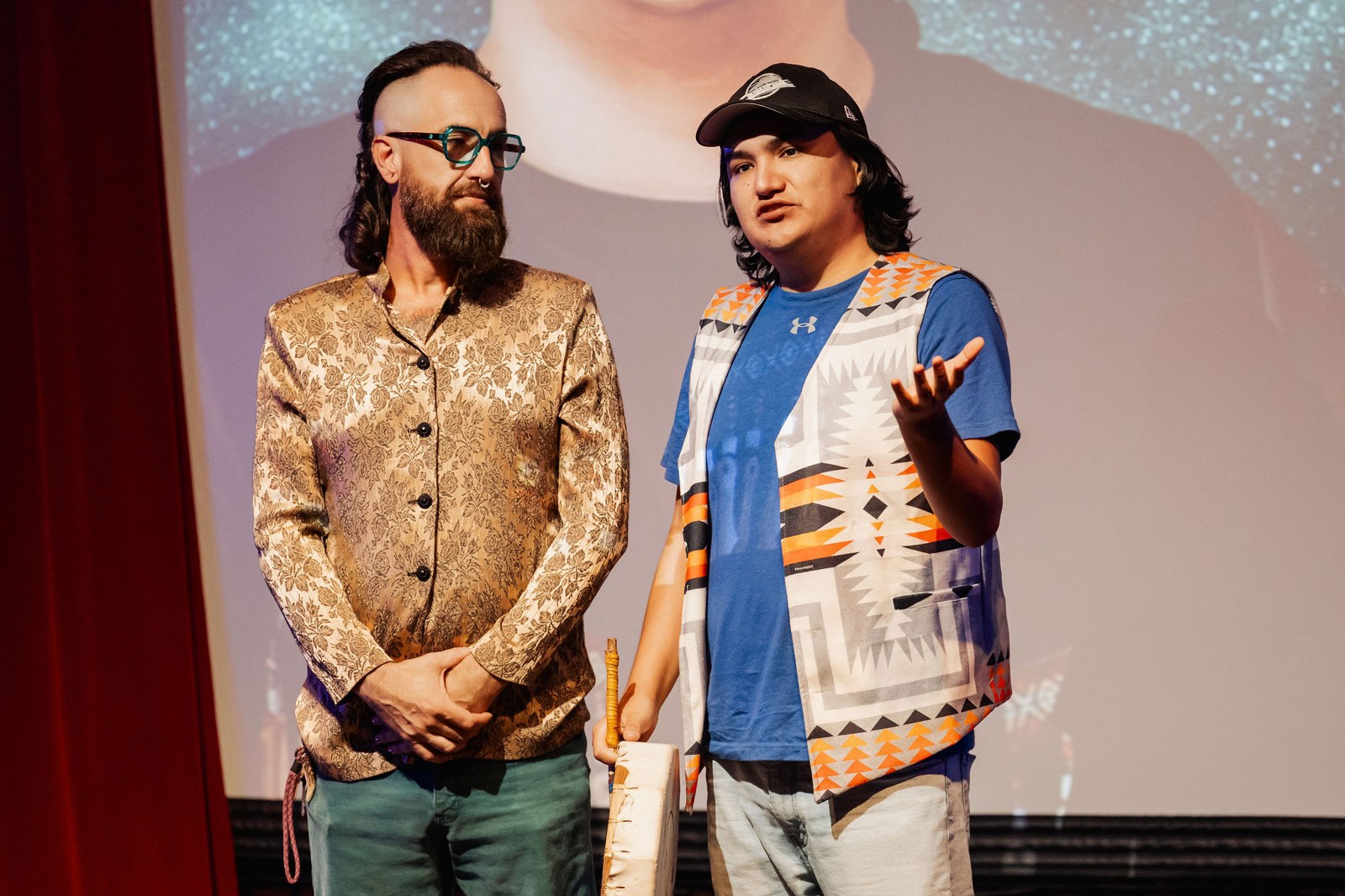
World Tourism Day, Friday morning, the Bosa Theatre at Capilano University. The student crew from TRECSA, the Tourism and Outdoor Recreation Student Association, had put together a panel under this year’s UN Tourism theme, the digital agenda and AI redesigning tourism, and the lineup got smaller before we started. Jason Williams from YVR had to cancel, and Paula Amos from Indigenous Tourism BC couldn’t make it either. So it was me and Amber Papou, the new CEO of the Tourism Industry Association of BC, two chairs, and a theatre full of tourism students who are going to inherit whatever mess we make of this moment.

Our moderator was Samantha Caleta, a third-year tourism student and TRECSA’s director of events, and she opened with the best kind of trap: what is your bad technology habit, the late-night TikTok rabbit hole equivalent? Amber copped to Pinterest, which she deliberately confuses by searching retirement planning and baby names in the same session so the algorithm never quite figures her out. I confessed to token maxing. Vibe coding is my rabbit hole. You can speak your ideas into existence with these agentic coding tools, and I have been trying to use every single token allocated to me every day, and I said it was probably a clinical condition.
Then Samantha asked the real question. My work runs through a lot of lanes, creative technology, community building, BC + AI, the Futureproof Festival of AI. How does any of it apply to tourism?

Booster or arsonist, pick your lazy
Here’s what I told her, and it’s the thing I keep saying everywhere because every conversation about AI tries to shove you into one of two camps.
On one side you’ve got the boosters: yo, AI is rad, get on board or get left behind, loser. No consideration for the societal costs, the water, the power, the fact that these tools were trained on the stolen work of all of mankind without consent or compensation. On the other side you’ve got the burn-the-data-center-down crowd, and look, the fears are valid. The homophobia, racism and misogyny systematically baked into these systems are real. But the pearl clutching doesn’t tell a single student in that theatre what to study, what jobs will be left, or where to actually use these things.
Both of those positions are lazy. What I told the students instead:
I asked them to walk forward with both hands full: curiosity about what AI can do in one hand, critique, transparency, authenticity, and a seat at the table in the other.
And the reason the critique hand has to stay full: the people with the strongest objections are exactly the voices we need at the table. If they walk away, every decision about these technologies gets made by the hype crowd, and the hype crowd usually has a financial vested interest. The venture capitalists, the hyperscalers, the people who stand to benefit. That’s how you end up asking the only question that matters, the one the whole morning kept circling: how do we remain human in the age of synthetic everything?

Ten three-hundred-page PDFs a week
Samantha asked what students should actually focus on becoming good at, and I got to tell my favorite working example of the line between human and machine. My buddy Jonny Williams, a Squamish Nation councillor, had been a cultural advisor for the Nation. His job was reviewing development proposals for their cultural impact, two or three hundred pages each, ten of them a week, hunting for the two or three paragraphs that actually needed his assessment. He was spending most of his week parsing documents instead of doing the cultural assessment only he could do.
So he flipped it. Monday, he drops all ten PDFs into an AI and asks for a report on the sections that require his cultural advice. Middle of the week, he does the actual work, talking out his analysis, recording his voice, feeding the transcripts back in. Friday, the machine helps assemble the report. As I put it on stage:
“The human stays in charge of the cultural advisory part. The AI stays in charge of the document parsing part.”
A computer is not going to carry oral history passed down from ancestors about appropriate land use. A human should not be spending ninety percent of a week parsing PDFs for the cultural paragraph in the middle. The human keeps the judgment. The machine hunts for the relevant pages.

The five-minute sandwich
Then I gave the students the most practical thing I have, the method I use on everything, including that very panel. Record five minutes on the way into a lecture: where I’m going, who’s talking, why I care, what I hope to get out of it. Record the thing itself, transcribe it. Five minutes on the way out: what landed, what it connects to. Between those three documents you’ve got serious reflection, grounded in your own voice, and you can write something real off it immediately.
Do that for every class, every reading, every assignment, every presentation, and drop it all into a personal knowledge base. A Google Drive folder, Notion, Obsidian if you want to keep local notes, it doesn’t matter. By second year you’re sitting on a rich, unique body of knowledge that is yours, and that’s when it gets fun: apply for the job with a cover letter built from your own corpus. Spin up an assistant that answers from everything you’ve ever learned. When the next fancy model drops, you pour your knowledge base into it and suddenly all its new capabilities come tuned to a little sandbox that is your own.

I was demonstrating the point in real time. The little Plaud gadget in my pocket recorded the whole panel, and this post exists because of exactly that pipeline.

Steam clock, Stanley Park, suspension bridge
Ask any AI for a Vancouver itinerary and you’ll get the same vanilla median every time: the steam clock, Stanley Park, the Capilano suspension bridge. That’s what these systems do, they shave off the most interesting bits and push everything toward the bland middle. Which, I told them, is actually the opportunity.
“taste, judgment, and a fucking perspective.”
Nobody’s weird Venn diagram is predictable. Samantha is into alpine outdoor stuff and also Renaissance fairs, and there’s a through-line from west coast alpine culture to Austrian alpine culture that no itinerary machine is ever going to hand her. I don’t want the steam clock version of a city. They want the queer businesses on the Downtown Eastside, the tech-creative hubs, the strange specific thing. If you’re coming into tourism now, the move is to lean hard into the three or four weird overlapping things that make you distinct from the person sitting to your left or right. The machine can’t easily predict that, and it can’t replace the passion you have about it.
Amber backed the human side of this from the industry side. Tourism, she said, is fundamentally a human relationship business, and within two days of starting at TIABC she learned that nobody in this sector shakes hands: they grab you into a bear hug and squish you, and you’d better hug back. She also made the rural broadband point. You can’t learn AI, let alone run a tourism business on it, without a connection.

The glowing jellyfish problem

Then a kayak guide stood up. She runs tours on the water and laid out the problem: people are booking onto her tours expecting to see glowing jellyfish, because some AI itinerary told them they would. Hallucinated wildlife. She’s the one standing on the beach dealing with the disappointment.
Is anybody fact-checking this stuff when it gets integrated? My honest answer: absolutely not, it’s a chaos mess out there. But I wasn’t going to leave her on the negative side of the ledger, because the fix is sitting in her own camera roll. She’s got photos and videos from every trip she’s ever run. Put that archive into a knowledge base and let the machine build itineraries from her actual trips, and the emails going out aren’t glowing-jellyfish fiction from the internet, they’re pulled from what she shot last season. Me as her potential customer, getting a note in her voice with her real photos and real coordinates from real trips? Way more rad than an Expedia confirmation template. The glowing jellyfish are the warning. Her own trip archive is the way out.
The other trust question was what to tell your own customers. My advice was boring on purpose: put an AI policy on your website, one that is authentic and sounds like a human wrote it, and say where you are using these tools and where you are not, and why. The administrative, boring, operational work goes to the machine. The human factors stay human.
Same theme, bigger stage: I brought up the Air Canada chatbot case, where the airline’s support bot invented a bereavement fare that didn’t exist, the human agents tried to walk it back, and BC’s Civil Resolution Tribunal ruled the airline had to stand behind what its chatbot said. One of the biggest travel companies in the country, still figuring out in public where its responsibility sits when it puts a bot between itself and its customers. I mentioned stories I’d heard about communities seeding fake hot-spring photos to throw itinerary machines off. I have not checked those stories, but they make the problem plain: the bot can’t tell a local tip from a planted dud. It’s going to be wavy gravy for a while.
And under all of it sat the money question: when the machine version is free, does anybody pay for the human one? Honestly, unsettled. People prefer home cooked meals to McDonald’s and handmade couture to fast fashion, but most of us can’t afford couture. Some people still ride horses even though we got freaking electric cars. Some travelers will pay a premium for the digital detox, AI-free, hundred percent organic version of a trip. How many, and how much, remains to be determined.

Surveillance, or getting kids to school on time
Somebody asked who should steer this, business, government, or the industry itself, and my answer was aimed straight at the decision-makers. You can roll out AI in your hotel housekeeping operation to surveil your housekeepers better, audit them more, squeeze more throughput out of them. Or you can use the same budget on scheduling software that gets everybody off shift at the right time of day so they can get their kids to school. One of those maximizes profit extraction. The other one maximizes the human factors for your own staff. I know which direction I want the limited pilots and limited budgets pointed.
I mentioned an example I’d heard about from Germany, but I haven’t verified the operator or the results. The idea is worth testing: use occupancy and reservations to point visitors toward places that want them instead of funneling everybody into the same three spots.
Amber’s version of the same fight is the province’s Look West tourism plan, which wants to roughly double tourism revenue to $48 billion a year by 2036. She talked about the obvious pushback: how many more people can Tofino or the Sea to Sky gondola take? Her answer was to focus on value, not just visitor counts. Which looped right back to the weird sweet spot: I got to hype her own hometown work on stage, Merritt, BC, the country music capital of Canada, murals all over the streets, thrift stores full of rich people’s worn-once western getups. That’s a town letting its freak flag fly, and nobody else gets to be Merritt.

Caught up is a non-useful illusion
The last question came from Christy Dodds, who teaches in Capilano’s tourism program and was honest about what every working person in that theatre was feeling: we’re busy, the semester is planned out to Christmas, is there a shortcut to staying current? When she renovated her cottage she lived on YouTube DIY. She’s got a couple of stock guys she trusts. Who do you follow?
My answer was the thing that’s kept me afloat: community. I started meetups at my studio mostly so other people would show me their rabbit holes and I’d show them mine. Some kind of persistent circle, a paid cohort, an office-hours group, a group chat of tech-enabled tourism people, a community of practice in your specific space. Guilds, basically. Nobody keeps up with this alone; there’s way too much for one person. Focus on the foundational stuff, because the tools and prompts you can hoover up in a weekend of YouTube whenever you need them. Amber pointed everyone at the Tourism AI Network and Peter Pilarski’s ongoing tourism-specific AI coverage, which is a solid start for her side of the fence.

And then the thing I most wanted the students to take home:
Being caught up is a non-useful illusion. Get in the ocean and swim. The minute you think you have arrived at an AI certification that settles the matter, the next thing comes along and pulls the rug out.
I’m turning fifty this year. I’ve been non-consensually reinvented by the internet, then by mobile and social, and now by this. The students in that theatre get to carve their way out from the start, which in a lot of ways is the better deal. What I’ll tell them is what I told them Friday: focus on your weird sweet spot, whatever that is. That really unique intersection that only you know about, your language plus your hobbies plus your passions plus some other twist no computer could ever predict. My weird sweet spot is mine. Theirs will be theirs.

Further down the rabbit hole
- Capilano’s School of Tourism Management wrote up the morning on LinkedIn, with the taste, judgement and perspective line quoted back in the wild
- Tourism Industry Association of BC and their LinkedIn, where Amber’s crew does the advocacy work
- TRECSA, the student association that built the morning, and Capilano’s tourism management program
- UN Tourism’s World Tourism Day 2026, the official theme the morning ran under
- Tourism AI Network, the tourism-specific AI community Amber name-checked
- BC’s Look West Tourism Sector Action Plan, the $48-billion-by-2036 argument
- The Air Canada chatbot case, required reading for anyone bolting a bot onto customer support, plus the Moffatt v. Air Canada writeup, the BC tribunal decision that made the airline own its bot’s words
- Both Hands Full, the long version of the frame I ran at Capilano, video included
- The first time the both-hands-full line closed a post on this site: ALL IN Montreal, Day One, and the rest of that series: Day Two and the Final Day
- My speaking page at the Futureproof Festival of AI and the mothership, BC + AI